
The New Wealth
Everyone is talking about longevity. Here's what no protocol can measure.

I am floating in a dark room in Mexico, my head resting on the chest of a woman I met three minutes ago, and I cannot tell you where my body ends and the water begins.
She asked me one question before we started. Can you trust me?
I said yes. And then I let go of everything.
This is SHA Mexico in Riviera Maya. And this moment — this particular moment of weightlessness in a warm pool with a stranger in a wetsuit — is not what I expected to be the thing that would truly change me. I had my eye on the hyperbaric chamber. The intravenous ozone therapy. The body composition scan that reads your muscle mass and metabolic age and vascular health like a mechanic running diagnostics on a car. I came here for the science. I stayed for what the science couldn’t measure.
But let me back up. Because there is a cultural conversation happening right now that I think matters to this story.
The billionaires figured something out.
Yachts are passé. Square footage is passé. The new signature of wealth — the thing the most powerful people on the planet are quietly competing over — is biological age. Health span. How well you are living and for how long. Bryan Johnson, the tech entrepreneur, spends $2 million a year on a protocol designed to reverse his aging. Peter Thiel, Jeff Bezos, Larry Ellison — billions of dollars flowing into longevity research, into clinics, into the measurement and optimization of the human body as the ultimate asset.
And it’s not just billionaires anymore. It’s trickling down. The continuous glucose monitor on the arm of your pilates instructor. The red light therapy panel in your neighbor’s garage. The biological age test your colleague won’t stop talking about. We are collectively, culturally, obsessed with the idea that we can outwit time if we just have the right data.
I am not immune to this. I am, in fact, a willing participant.
Which is how I ended up at SHA.
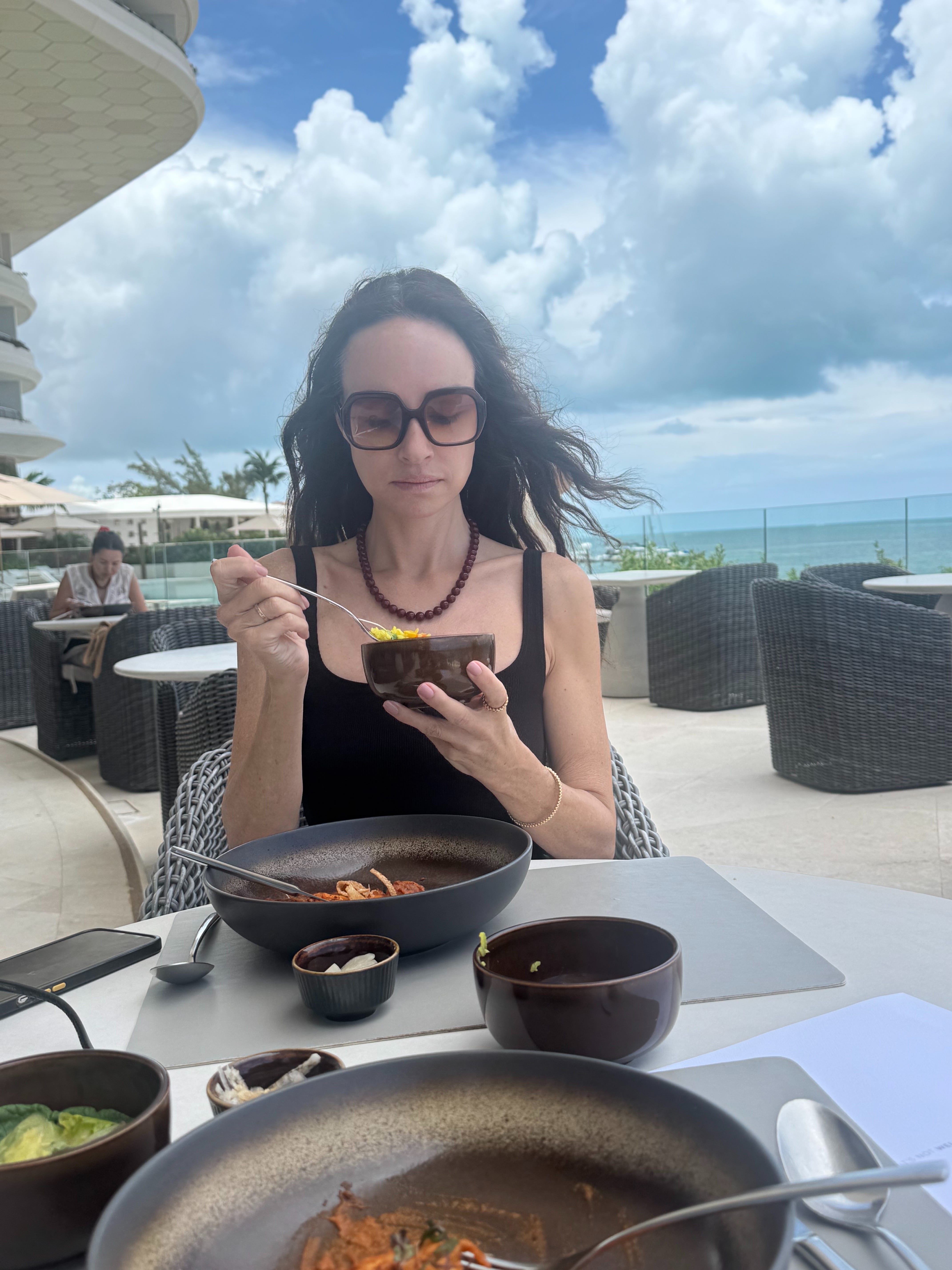
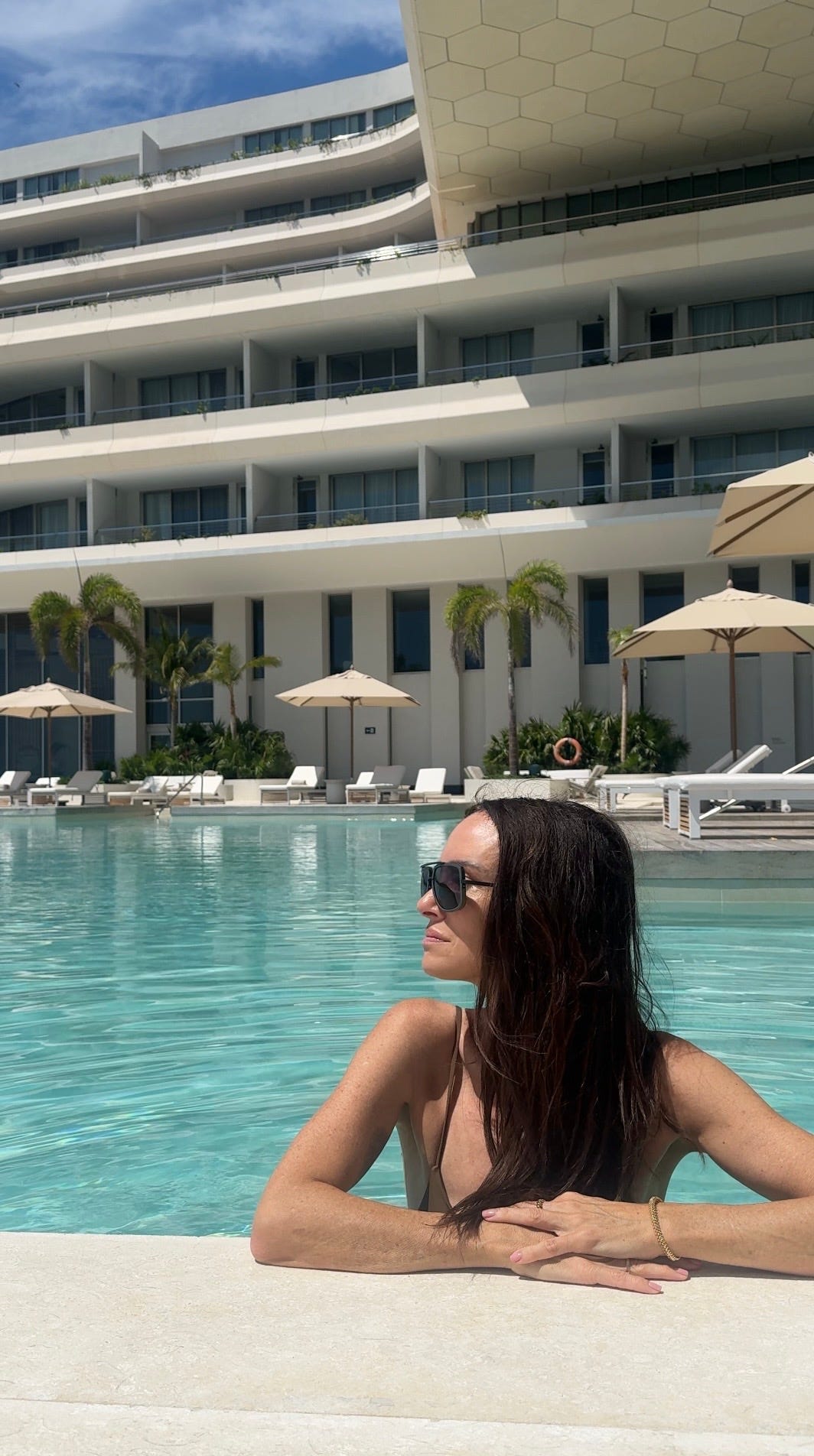
SHA invited me as a guest for five days last week. My love, Greg, covered his own stay. We paid our own flights. And honestly, I would have paid every dollar of mine — this was my second visit to this destination, and I will go a third time. I’m telling you this because I want what follows to read as what it is: the honest account of a woman who believes in this place and also believes in telling the truth about what she found there.
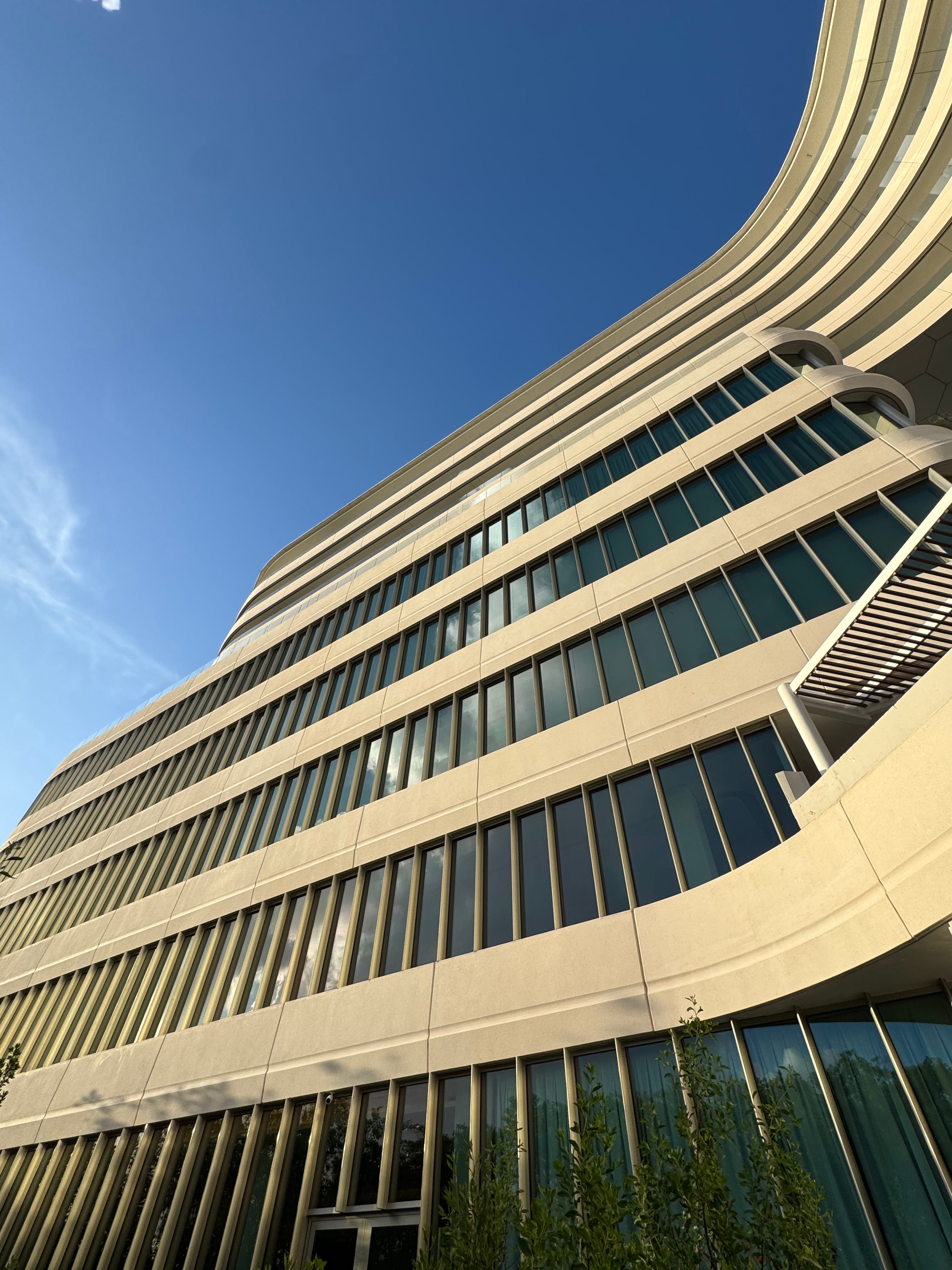
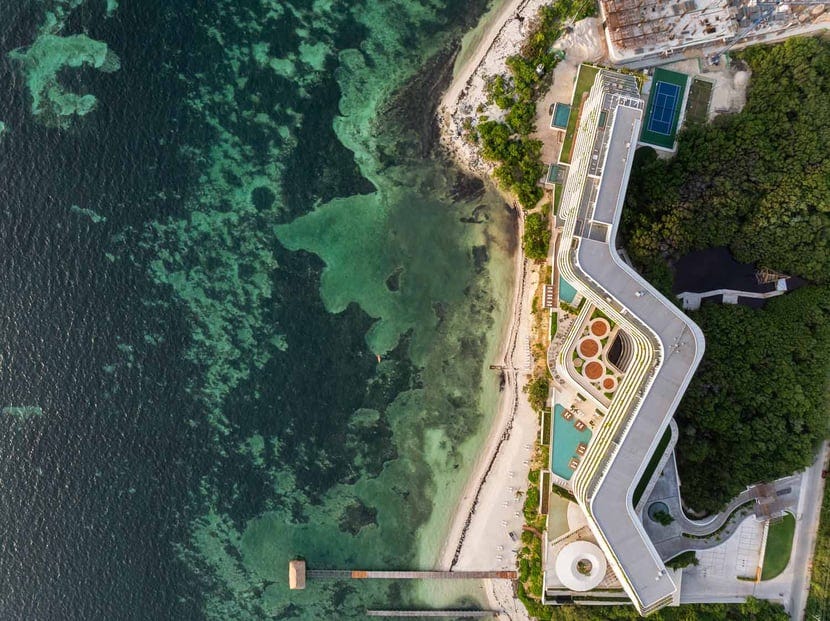
SHA is located on the Caribbean coast of Mexico, and it’s almost like it should not exist. It is too beautiful and too rigorous and too thoughtful to be real. A futuristic building that somehow also feels like a sanctuary. Medical doctors and Michelin-worthy food and an underground hydro-circuit and a spa and a macrobiotic kitchen all under one roof. You can have your blood drawn at 8am and be in a warm pool by noon and eating the most exquisite polenta porridge with caramelized pear and star anise by 7pm, wearing your robe, feeling like yourself again. Or maybe for the first time.
Day one is the body scan.


This is the under-the-hood moment. Straight off the airplane, you step in front of the Visbody machine — a full-body 3D composition scanner that maps your muscle mass, fat distribution, posture, vascular age, balance, bone density, metabolic rate. In minutes, the screen reveals everything, and shortly after, you are making sense of it all with a world-renowned physician. Muscle mass by segment. Fat percentage. The precise degree to which your head juts forward from your shoulders (mine: 6.6cm, which is to say, I am a woman who has spent considerable time at a screen). Your metabolic age. Mine came back at 49. I am 51. I will take it.
But the number that stopped me was not the flattering one.
Nervous system balance: 97.97. Unbalanced.
Mental stress: Very High.
Overall stress load: Very High.
I stood there in a white robe looking at this data thinking: of course. Of course the most sophisticated diagnostic suite on the planet looked at me — a woman who exercises and meditates and takes her supplements and has been sober for nine months and genuinely believes she is doing the work — and found that my nervous system is still, quietly, perpetually, running the alarm.
This is what the optimization culture doesn’t tell you. You can be excellent and exhausted at the same time.
SHA built my program around what the data found: Rebalance & Energize. Its stated purpose: interrupt the stress cycle, regulate cortisol rhythms, restore autonomic balance. Which is a clinical way of saying: you need to stop.
I met with a few different doctors during my stay. Functional medicine. Endocrinology. They sat with me and walked through my bloodwork — the Quest panel I’d had done two weeks prior — in a way that no fifteen-minute doctor’s appointment has ever afforded. My LDL slightly elevated. A note about the relationship between chronic stress and cardiovascular risk. My hormones, navigating menopause with a complexity that deserves more than a prescription and a goodbye. These are conversations I have been trying to have inside the American medical system for years. At SHA, they happened naturally, between appointments, over the course of an afternoon while you lounge poolside sipping your Mu tea.
The bioenergy assessment was a different kind of conversation entirely.
A clinician presses on pressure points along your fingers and toes with a high-tech device and reads the energetic state of the meridian channels running through your body. It is not perfect science. It is not trying to be. What it offered me was a different map of the same territory — and what it found, in the language of Chinese medicine, was tension in the gut channel, a kind of energetic holding in the digestive center.
I went directly from that assessment to acupuncture, targeting those exact areas.
To have a clinician name the block and then immediately have a practitioner address it — in the same building, on the same afternoon — is the kind of integrated care every human should be afforded. Let’s be honest.
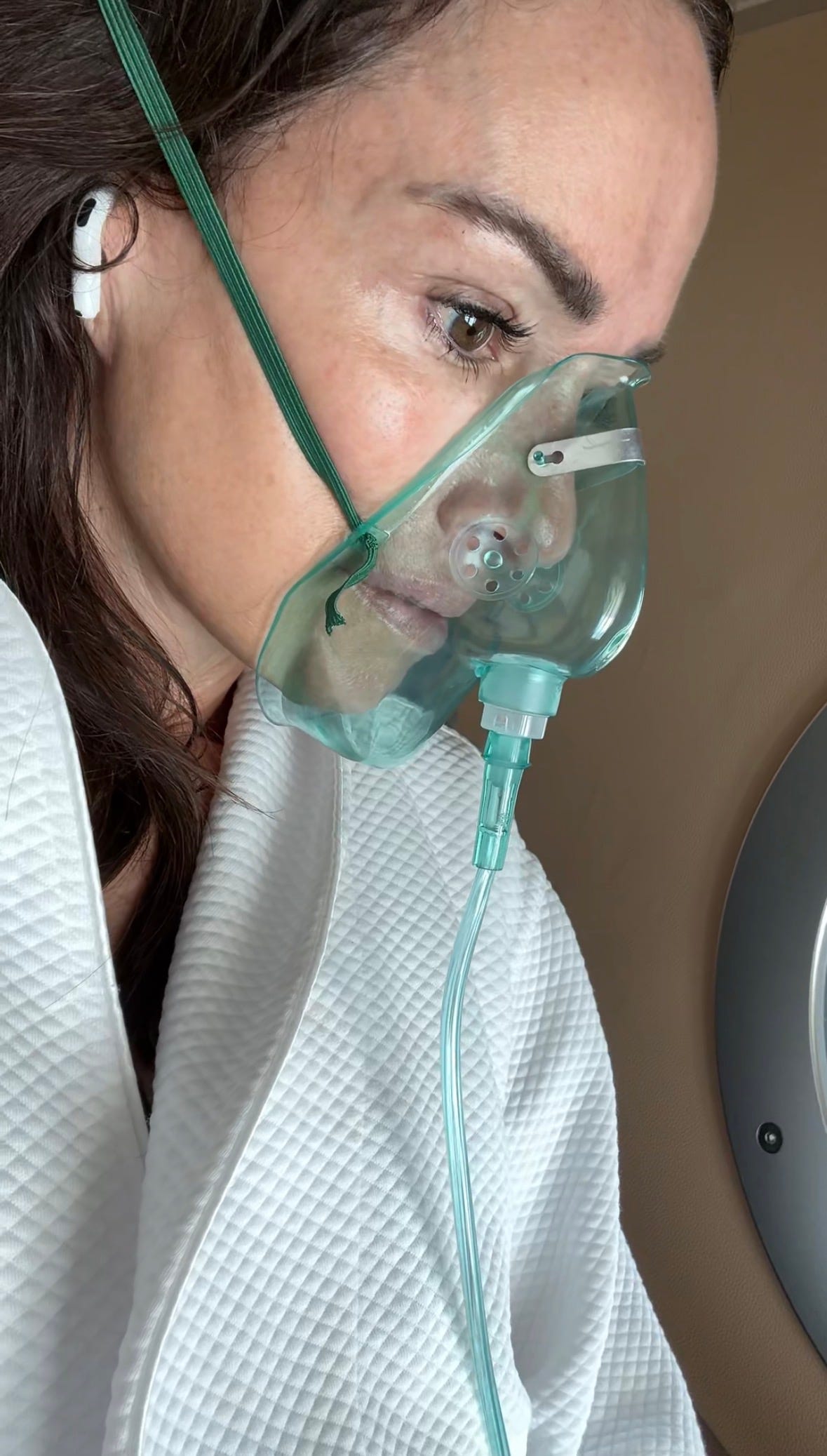
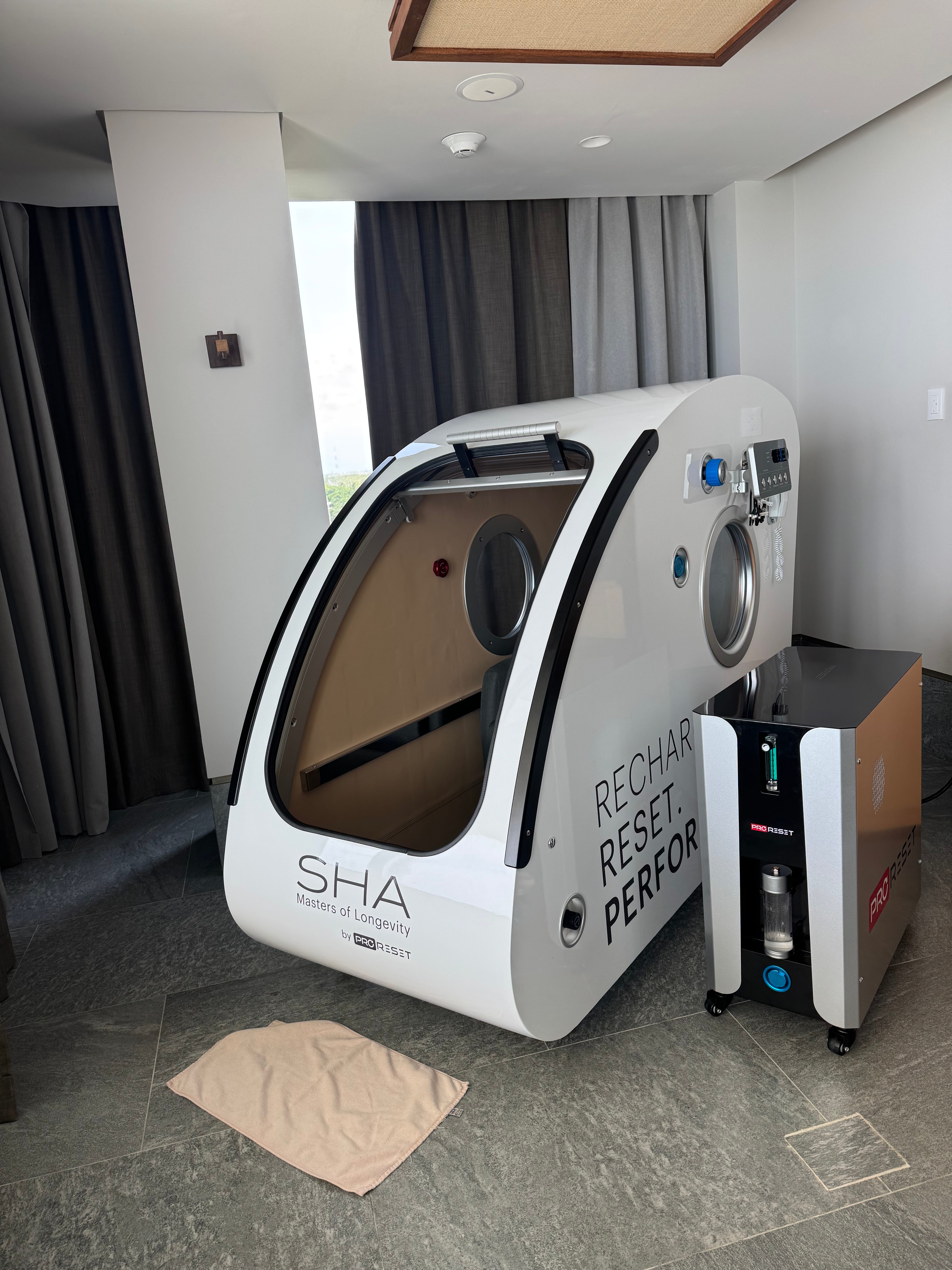
The treatments at SHA are numerous. I want to be honest about the hyperbaric chamber: I lasted approximately four minutes. The pressure on my ears was immediate and significant and not negotiable. I tapped out, slightly embarrassed. I did not become friends with the hyperbaric chamber. Turns out I have some type of issue with Eustachian tube function. I tend to have discomfort in deep waters and in cold temperatures. The pressure from the machine and I did not agree.
The intermittent hypoxia therapy was a different story — alternating oxygen concentrations that train the body to use oxygen more efficiently which left me feeling strangely clear.
The Abhyanga massage — warm oil, long strokes, an ancient Ayurvedic practice — is the kind of body work that makes you understand why touch is medicine.
The craniosacral osteopathy surprised me. I expected something closer to a scalp massage. What I received was something much more precise — subtle micro-movements, skeletal alignment work, a practitioner whose hands moved slowly and deliberately and communicated with the deepest structures of the body. She noted tightness in my hips and pelvis. She advised me to prioritize somatic work, to keep those areas mobile, to stop storing my stress in my body’s center.
The nervous system scan said unbalanced. The osteopath felt it with her hands.
Two languages. One message.
And then there was the hydro-circuit.


The bottom floor of SHA is a different world. Dim lighting. Heated cement chaise lounge chairs with warm towels folded over them. Infused water at every turn. A steam room that smells of eucalyptus and intention. Red light therapy bays. A pool for floating. The design is extraordinary — the kind of space that communicates something to your body before a single treatment begins. You are safe here. You can slow down.
I spent more time in this area than anywhere else. Just floating. Just breathing. Just being a body in warm water without an agenda.
And then I experienced WATSU.
I entered a private room with a pool slightly larger than a hot tub. Warm water, soft light, ambient music and a woman in a wetsuit who introduced herself and asked: Can you trust me?
Within five minutes I had submitted completely.
Your eyes close. Your body is lifted. The practitioner moves you through the water with a slowness that is almost ceremonial — supporting your head, guiding your hips, holding your knees. At moments my head rested on her chest. The water held everything my muscles had been holding. And somewhere in that warm dark space, I left my body.
It is the same feeling I sometimes reach in deep meditation — that awareness that I am not my flesh or my bones. That my consciousness is something separate from this physical form that I tend and worry over and optimize. I felt weightless. Genuinely weightless. Not as a metaphor. As a physical fact.
I did not track the time. I went somewhere. And that somewhere was the most real place I had been in a long, long time.
A note about the cuisine.
SHA operates three nutritional programs. The SHA menu is the primary offering — anti-inflammatory, macrobiotic-influenced, built around whole foods, fermented vegetables, algae, seeds, and preparations so beautiful they make you reconsider what eating is for. The BioLight is the lower-calorie option. The Kushi is fully vegetarian and the most restrictive diet for those with weight-loss goals.
Every person who puts food in front of you knows exactly why it is in front of you. The nutritionists and the chef are in constant communication. The servers understand the intention of every dish. Which means eating becomes medicine — and the ritual of why we put things in our mouths at all suddenly becomes a meaningful question rather than a thing we do between meetings.
On our last night, Greg and I were so moved by the food experience that we asked to meet the chef. He came out of the kitchen and spoke about his ingredients with the same pride I imagine SHA’s physicians bring to their diagnostics. This is sourced from here. This ferment took this many days. This herb does this specific thing.
I thought about this on the flight home. About how rarely we eat with that kind of intention in our real lives. About what it would mean if we did.


Here is what I came home with.
Not a protocol. Not a supplement stack. Not a biological age I intend to weaponize in conversation.
I came home knowing something the data confirmed and the water taught: I am running too hot. My resilience score at SHA was Very High — which sounds like a compliment until you understand that high resilience in a chronically stressed system means your body has gotten very good at functioning under pressure. That is not the same as thriving. That is adaptation. That is a woman who has learned to carry the weight so well that even the best diagnostics in the world have to look twice to see it.
The billion-dollar longevity complex is optimizing the machine. And the machine, in many cases, is running beautifully. Mine is. Excellent fatigue index. Perfect balance score. Metabolic age younger than my actual age. Clean bloodwork on almost every marker.
And Very High mental stress.
And Unbalanced.
Because here is what the biohackers haven’t cracked yet, what no protocol or peptide or hyperbaric chamber has a metric for: the thing that finally reset my nervous system was not a clinical intervention. It was a stranger in a wetsuit asking if I could trust her.
It was being held.
It was sixty minutes of not being the one holding everything together.
SHA — for all its extraordinary science and its state-of-the-art diagnostics and its physicians and its intravenous ozone and its body composition scans — ultimately reminded me of something I already knew.
Health is not a finish line. It is a frequency. And sometimes the most sophisticated thing you can do for your body is stop optimizing it for one hour and let a stranger in warm water hold your head.
The data will still be there when you surface.
With love from the ranch.
Catt
Wow, Catt. What an incredible experience for you and Greg. Thank you for sharing and taking us along with you! Truly life changing!🤍
What a fascinating experience! So glad you got to experience this. Thank you for sharing your thoughts with us.